
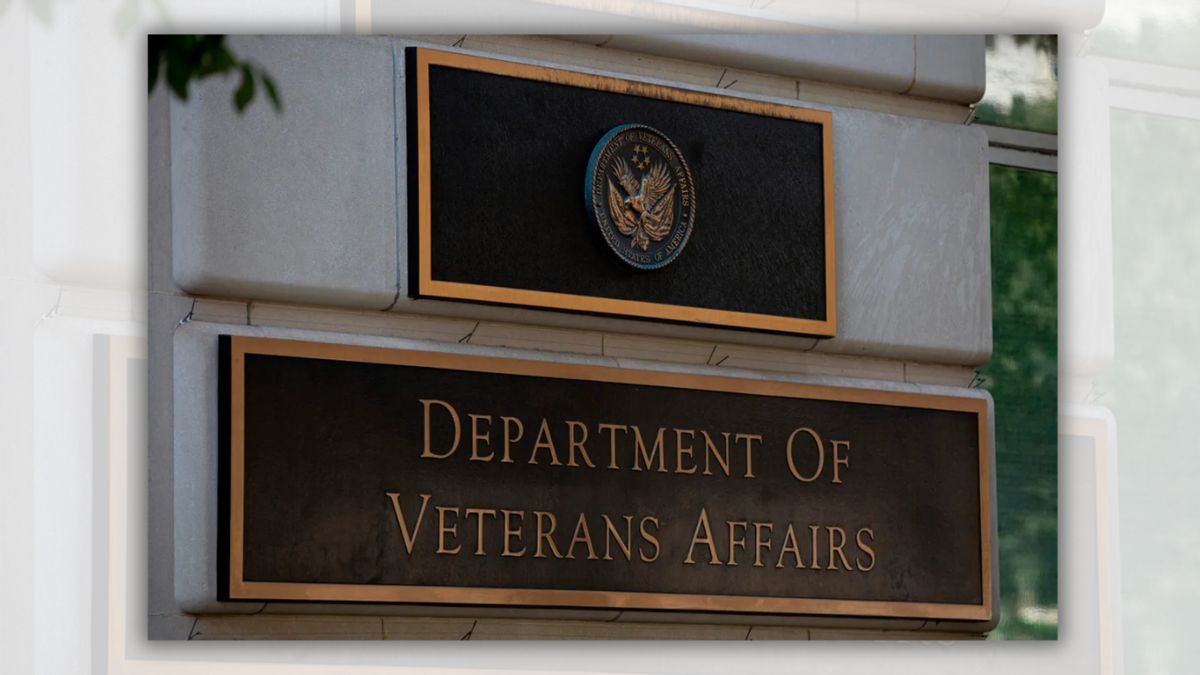
In
The claim spread on platforms like Facebook, X, Reddit and TikTok. Many posts blamed Elon Musk's Department of Government Efficiency for the $1 limit; for example, this Facebook post said the cards would be set to $1 "until DOGE decides which employees 'deserve to have one.'"
Some of these posts included a screenshot of a message from a purported employee at Seattle's Veterans Affairs hospital. The alleged employee said they received an email "at the Seattle VA" announcing that "they are reducing the balance of all procurement cards to $1," which will impact purchases for hospital supplies, gas for transportation and more.
"This came from GSA but it really came from DOGE. Our facility got notice only today even though the GSA memo is from 2/20. This will cripple patient care at the VA," the message said. "GSA" is the U.S. General Services Administration, which helps manage basic operations at federal agencies.
It's true that the GSA has asked at least 15 other agencies to reduce their card limits, according to a statement from the agency. The GSA didn't explicitly say if it requested $1 limits but did reduce its own card limits to that amount; however, it's likely (though Snopes was not able to independently verify as of this writing) that the GSA asked the VA to reduce most of its card limits to $1, according to a reputable news report. U.S. President Donald Trump also signed an executive order on Feb. 26 putting a freeze on federal credit cards and acknowledging DOGE's involvement in the decision. Therefore, while the details remain unverified, the body of proof indicates that the broad strokes of this claim are accurate: It's true that many federal agencies, reportedly including the VA, received requests from GSA to reduce card limits and that a federal credit card freeze connected to DOGE did not exclude the VA.
It is not yet possible to confirm the details of the purported Seattle VA employee's message; the Seattle VA directed inquiries to a VA spokesperson, Tami Begasse, who directed inquiries to the VA's general press inbox — which has not responded to a
In the GSA's statement, the agency called the $1 limit a "commonly used risk mitigation best practice" and said "it is disappointing that some federal employees characterize proper and sensible oversight as burdensome."
"Under this administration, GSA is committed to saving every single dollar and helping federal agency partners prevent all fraud, waste, and abuse," the agency said.
GSA requested agencies set limits on cards
On Feb. 21, 2025, the GSA released a statement that said the agency "asked 15 other agency leaders to reduce their agency charge card limits, and the number and usage of cards." The GSA also set a $1 limit for "all cardholder accounts" on its own procurement cards.
The agency's statement did not list which agencies were included among the 15, and the GSA declined a request for further comment.
However, credible evidence suggests the VA was one of the 15, including a Federal News Network story from Feb. 26, 2025, which reported that the GSA requested the VA set all of its purchase and travel card limits to $1 "with a few narrow exceptions" in a Feb. 20 memo.
According to FNN, a publication for federal employees, the memo said that "up to 0.1%" of the VA's workforce could have purchase card spend thresholds set above $1. "Please provide the rationale for all such deviations on an employee-by-employee basis along with the proposed increased threshold," the memo supposedly said.
FNN's story notes that it is not legal for the GSA to force a $1 limit on the VA, so the memo sent to the VA by the GSA simply requested that the VA set this limit. However, a separate memo, reportedly sent on Feb. 23, asks the VA to make the GSA "a consignor with delegated authority on all task orders," which may change whether the GSA has power over the VA's spending.
FNN shared plain text copies of the two memos with Snopes in an email but did not provide copies in the form of forwarded emails, PDFs or other formats allowing further independent verification of its reporting. Neither the GSA nor the VA publicly disputed FNN's reporting.
According to a 2024 report from the VA's auditor, the VA's three charge card programs — purchase, travel and fleet — had over $5.6 billion in spending from July 1, 2022, through June 30, 2023, with $5.5 billion of that amount spent through purchase cards. Purchase cards are used for supplies and services, travel cards for travel expenses and fleet cards for fuel, maintenance and repair of "government-owned and -operated vehicles."
The memo obtained by FNN reportedly from the GSA calls on the VA to limit travel and purchase cards to $1. "These card program changes will not affect Fleet cards," the memo said. Thus, the claim from the purported Seattle VA employee that purchasing gas will be impacted is not true, at least for any government-owned vehicles. However, given that most procurements at the VA are through purchase cards, it is likely that the $1 limit would impact most purchases.
The auditor's report said the VA had 11,846 purchase cardholders, 21,147 travel cardholders and 4,188 fleet cardholders from July 1, 2022 to June 30, 2023 — and that "the Purchase Card Program is at medium risk, and the Travel and Fleet Card Programs are at low risk, for illegal, improper, or erroneous purchases."
It is unclear whether the $1 limit is currently in effect as of this writing; the memos did not include a deadline for implementation.
DOGE's role in credit card freeze
Amid the requests from the GSA to other agencies, Trump on Feb. 26 signed an executive order, "Implementing the President's 'Department of Government Efficiency' Cost Efficiency Initiative." This order put a temporary freeze on nearly all credit cards held by agency employees — without any explicit exception for the VA. The relevant text is below:
(f) Credit Card Freeze. To the maximum extent permitted by law, all credit cards held by agency employees shall be treated as frozen for 30 days from the date of this order, except for any credit cards held by employees engaged in, or charges related to employees utilizing such credit cards for, disaster relief or natural disaster response benefits or operations or other critical services as determined by the Agency Head, and subject to such additional individualized or categorical exceptions as the Agency Head, in consultation with the agency's DOGE Team Lead, deems appropriate.
It's worth noting that the executive order directs agency heads to make exceptions "as the Agency Head, in consultation with the agency's DOGE Team Lead, deems appropriate," which echoes the language from social media posts claiming that DOGE would determine which employees would receive exceptions to the $1 limit.
Wired magazine reported previously that DOGE put a $1 limit on GSA cards and planned to expand this across the federal government; Trump's credit card freeze and the GSA's request to the 15 other agency heads appear to align with this reporting.
Rep. Adam Smith, a Democrat from Washington, posted a video on X on Feb. 25 in which he stated that the Seattle VA's financial accounts were frozen and blamed Musk (emphasis ours):
We just received word from the Seattle VA that dozens of probationary employees have been laid off and in addition to that, they have froze their accounts and budget of the VA — their ability to purchase items like medical devices, but also when patients come in for transplants, they need to transported, they need to be put up. Those budgets are now frozen and the Seattle VA pretty soon — like tomorrow — is going to have to start canceling procedures for veterans because Elon Musk is randomly firing people and devastating the services to American people and now to our veterans.
A spokesperson for Smith's office, Carly McDonald, said via email that she would check if the office's source at the Seattle VA would speak publicly but "can't guarantee they'll respond"; this story will be updated if they do.
Thus, credible evidence does suggest the GSA requested the VA reduce most of its purchase and travel card limits to $1. Around the same time, Trump froze federal credit cards under DOGE's "cost efficiency initiative." This suggests DOGE may have been involved in an effort by Trump's administration to limit purchases by the VA through various methods.